
 English
 Français
  Português
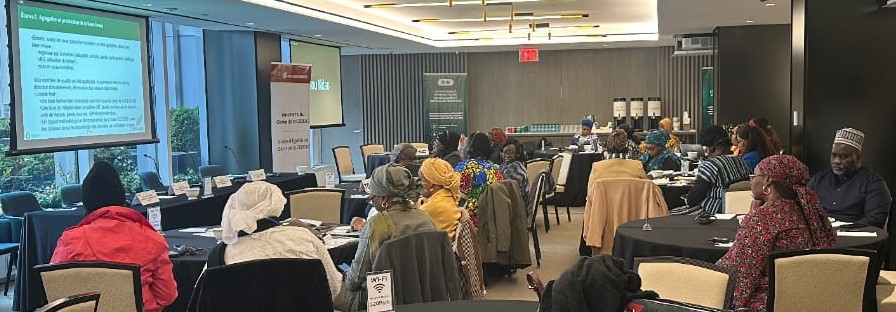
In collaboration with the Consortium for Economic and Social Research (CRES) and with financial support from the Ford Foundation, the ECOWAS Commission, through its Department of Human Development and Social Affairs and the ECOWAS Centre for Gender Development (CCDG), organised an interactive session to present the results of the ECOWAS Gender Equality Index and the Gender Barometer during the 70th Session of the Commission on the Status of Women (CSW70), held on 13 March 2026 in New York.
The session aimed to disseminate the findings of the ECOWAS Gender Equality Index and advocate with public authorities, civil society organisations and technical and financial partners for evidence-based public policies that promote gender equality. Presentations delivered during the session covered the ECOGEB methodological framework, the results of its Phase II, country rankings, as well as the challenges and prospects associated with the tool. These insights contribute to a better understanding of gender inequalities across the ECOWAS region and support the formulation of strategies to address identified gaps.
The official opening of the session was marked by three keynote addresses. In his remarks, Professor Abdoulaye Diagne, Executive Director of CRES, highlighted the importance of the ECOGEB tool for ECOWAS, particularly in reducing gender disparities. He noted that ECOGEB is a comprehensive instrument capable of improving the production and use of gender statistics, based on three core principles: scientific rigour, regional harmonisation and policy relevance. He further emphasised that the ECOWAS Gender Barometer serves as a monitoring tool to track progress in gender equality, identify persistent gaps and support planning and prioritisation of public policies, while also enhancing accountability and transparency in evidence-based regional governance.
In her address, Honourable Professor Fatou Sow Sarr, ECOWAS Commissioner for Human Development and Social Affairs, underscored the importance of ECOGEB in planning and measuring progress and disparities. She noted that the tool addresses gaps in comparable sex-disaggregated data and called for stronger stakeholder mobilisation around this catalytic instrument to reinforce advocacy efforts and drive sustained progress.
Formally opening the session, Honourable Dr Isata Mahoi, Minister of Gender and Children’s Affairs of the Republic of Sierra Leone, emphasised the critical role of data in informing effective public policy. She stated that the ECOWAS Gender Barometer reflects the real situation of women in the region and called for collective commitments to transform existing challenges into opportunities for empowerment. She highlighted the importance of collective action and harmonised frameworks to enable mutual learning from shared experiences and challenges. She further noted that the Gender Equality Index is a reference tool for analysing gender disparities across ECOWAS Member States.
The session was co-moderated by Honourable Dr Isata Mahoi, Minister of Gender and Children’s Affairs of Sierra Leone, and Honourable Mrs Moni Sankaredja Sinandja, Minister of Social Affairs, Gender, Family and Child Protection of the Republic of Togo.
It is worth recalling that in 2022, the CCDG, in collaboration with CRES, initiated Phase I of ECOGEB, focusing on the development of the ECOWAS Gender Equality Index and the production of reports on gender inequalities.