
 English
 Français
  Português
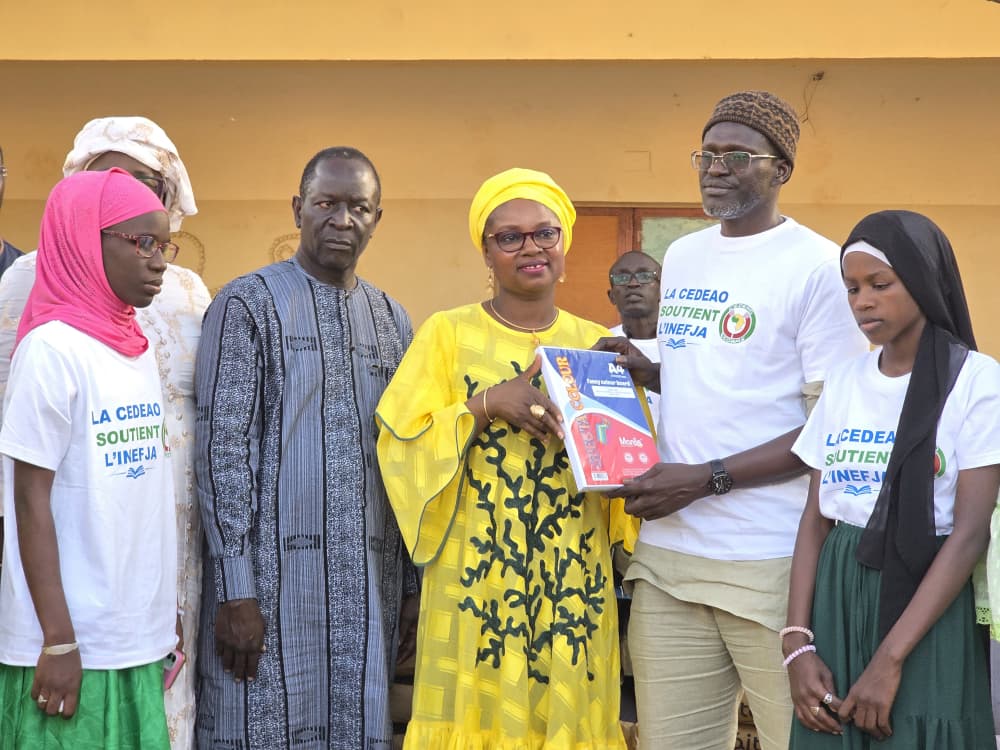
The ECOWAS Resident Representation in Senegal commemorated the Organisation’s 50th anniversary with the residents of the National Institute for the Education and Training of Blind youth of Senegal (INEFJA) on 13 February 2026.
On the occasion, Her Excellency Ms. Zelma NOBRE FASSINOU, ECOWAS Resident Representative, with the financial support of the West African Health Organisation (WAHO), presented educational materials to the Institute. She was accompanied by a delegation from the ECOWAS Gender Development Centre (CCDG) and the Inter-Governmental Action Group against Money Laundering in West Africa (GIABA).
This event followed a working session held on 27 and 28 November 2025 at the Institute with administrative authorities and the ECOWAS Club of Iba Der THIAM University of Thiès. The initiative, supported by WAHO, aimed to contribute to providing an enabling learning environment for women and men living with visual impairments.
The Institute currently hosts 160 residents who face significant challenges, including limited educational resources and insufficient food supplies for the school canteen. The donation of pedagogical materials is expected to improve learning conditions for the students while enhancing awareness of ECOWAS and its mandate within the region.
This celebration reaffirms ECOWAS’ commitment to social inclusion and to building an ECOWAS of the People, where no category of society is left behind.
The implementation of this activity involved several partners, including the School Medical Control Division (DCMS), the National Service for Health Education and Information (SNEISS), the NGO Agency for Social Marketing Development (ADEMAS), the Thiès Academy Inspectorate, the management of INEFJA Thiès, teachers, students, the Parents’ Association, the Regional Directorate of Social Action, and community women leaders known as “Bajenu Gox.”
Through this initiative, Her Excellency Ms. FASSINOU, ECOWAS Ambassador, reaffirmed the Organisation’s commitment to supporting communities in the development of human capital and well-being, which remain central to its social and educational agenda.