
 English
 Français
  Português
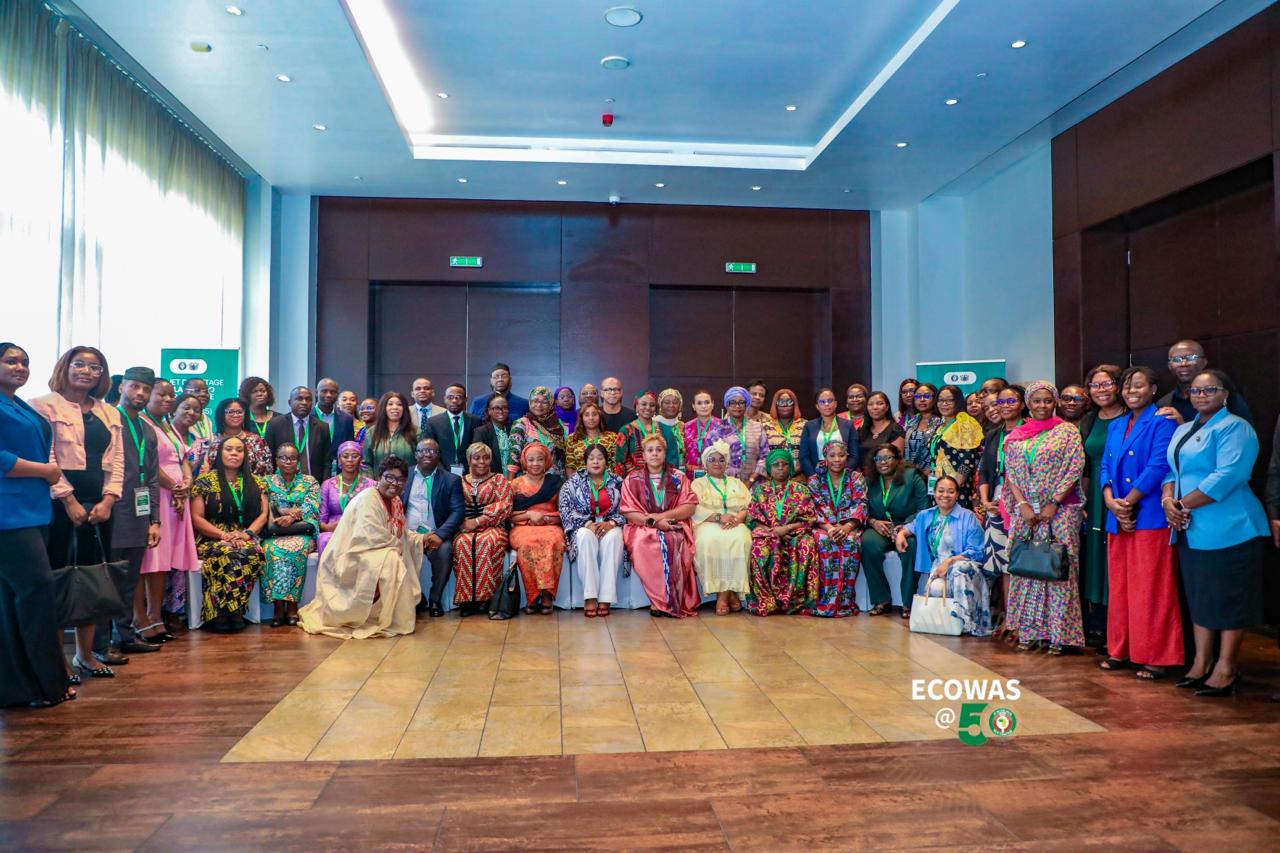
Gender experts and focal persons from the Human Capital Development (HCD) programme of ECOWAS Member States are meeting from 17 to 18 February 2026 in Accra, Ghana, as part of the Regional Consultation on Political Participation and Leadership of Women and Youth in West Africa. The objective of this technical meeting is to encourage Member States to adopt the necessary legislative reforms for the effective political participation and leadership of women and young people in the West African region by 2035. This meeting of experts precedes the Ministerial Meeting and High-Level Advocacy, which will take place on 19 and 20 February 2026, respectively, on the same theme.
This Regional Consultation, which is part of the overall celebration of ECOWAS’ 50th anniversary through the initiative known as the ‘Legacy Project’, A commemorative project marking the fiftieth anniversary and focusing on gender parity in elected bodies in ECOWAS Member States (2025–2035), supported by several ECOWAS departments and institutions, including the Office of the Vice-President and the Departments of Social Affairs and Political Affairs of the ECOWAS Commission, the ECOWAS Court of Justice and the ECOWAS Parliament.
This initiative has the support and participation of several technical partners, experts and regional civil society organisations working in the field of gender and youth promotion, including the United Nations Development Programme (UNDP), UN Women, the Bernadotte FOLKE Academy, Spanish Cooperation, the Koffi ANNAN Foundation, the ECOWAS Female Parliamentarians Association (ECOFEPA), WAXI and the West African Network of Young Women Leaders (ROAJELF).
This project stems from the ECOWAS’ observation that young people and women are underrepresented in political life. Women and young people, who make up a significant portion of the West African population, are still largely absent from decision-making bodies. Their demographic weight is undeniable, but their access to political institutions remains very limited in many countries. According to data from the Inter-Parliamentary Union (2023), women hold on average only 18.4% of parliamentary seats, while young people under the age of 35 are very poorly represented in parliaments.
The opening ceremony of the Experts’ meeting featured several speeches. In her welcome address, Ms Sandra OULATÉ FATTOH, Director of the ECOWAS Centre for Gender Development (ECGD) mentioned that this Regional Consultation offers a decisive opportunity for the political future of women and young people in the region. “It provides the ideal opportunity to analyse legal and social obstacles and formulate bold recommendations for far-reaching electoral reforms with a view to achieving gender parity in the elected bodies of ECOWAS Member States by 2035”, she said.
Ms Zipporah NDIONE, President of ROAJELF, highlighted the continuity between the ECOWAS Legacy Project and the ALPOJEF EMPO’WONEN project implemented by her organisation, stating: “I reaffirm ROAJELF’s willingness to strengthen existing partnerships and co-develop innovative initiatives linked to the Legacy Project.”
Representing the Honourable Chantal FANNY, President of ECOFEPA, at the opening ceremony, the Honourable Moïma BRIGGS MENSAH emphasised that women’s participation in political life is essential, as they are central to building the society of the future.
Officially opening the Experts’ Meeting, Dr Afisah ZAKARIAH, Chief Director, representing the Honourable Agnes Naa MOMO LARTEY, Minister for Gender, Children and Social Protection of the Republic of Ghana, emphasised that the Regional Consultation reflects ECOWAS’s continued commitment to promoting gender equality and citizen participation.
“Ghana reiterates its commitment to consolidating this progress and strengthening its collaboration with ECOWAS and its partners in order to sustainably advance the agenda of gender equality and the political participation and leadership of women and young people,” Dr Zakariah concluded.
This Regional Consultation is intended to provide a platform for open and constructive dialogue among the various stakeholders. It will be structured around three key components. The first is the Experts’ Meeting, during which the political participation of women and young people in West Africa will be analysed in order to identify constraints and formulate recommendations for reforms and advocacy aimed at achieving effective gender parity. The second component is the Ministerial Meeting, scheduled for 19 February 2026, which will review and validate the report of the Experts’ Meeting and define the advocacy strategy for the ECOWAS Political Declaration on Gender Parity to be submitted for adoption by the Council of Ministers and the Authority of Heads of State and Government of ECOWAS.
Finally, a High-Level Advocacy Meeting to be held on 20 February 2026 will seek to mobilise ECOWAS decision-makers and secure strong political commitments to reforms that promote the inclusive political participation of women and young people.
The Legacy Project is a flagship initiative aimed at consolidating the Community’s achievements in democratic governance while laying the foundations for a regional framework promoting equal opportunities between women and men. It also provides for the development of a model law/guide which, if adopted by Member States, would support reforms to strengthen the political participation and leadership of women and young people in the region by 2035.